
Nurse practitioner (NP)-led mobile clinics are transforming how communities access healthcare. These mobile units bring primary and preventive care directly to people who may not otherwise receive it.
From rural farms to urban neighborhoods, mobile clinics help close critical care gaps. More importantly, NPs are uniquely equipped to lead these efforts—offering quality care with a personal touch.
As healthcare systems look to become more flexible, efficient, and community-centered, mobile clinics led by NPs are emerging as a scalable solution. This article explores what these clinics are, how they work, and why they matter.
What Are Nurse Practitioner Mobile Clinics?
Defining the Model
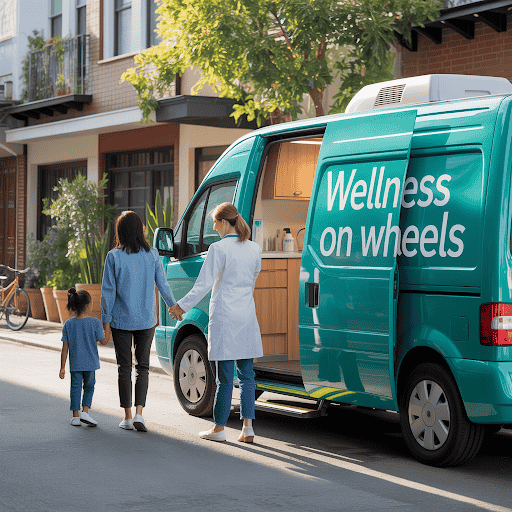
Nurse practitioner mobile clinics are vehicles—often vans or buses—equipped to deliver healthcare services on the go. They are usually staffed by one or more NPs and may include a medical assistant or driver.
In these clinics, NPs can:
- Diagnose and treat common illnesses
- Provide preventive screenings
- Prescribe medications
- Offer chronic disease management
- Deliver mental health counseling (where licensed)
These clinics often serve as a patient’s first and sometimes only point of care.
Types of Mobile Clinics Operated by NPs
Different types of NP-led mobile clinics meet different community needs:
Clinic Type | Focus |
Preventive Care Units | Immunizations, check-ups, women’s health exams |
Chronic Disease Units | Diabetes, hypertension, asthma management |
Behavioral Health Units | Mental health counseling, addiction services |
Some mobile clinics offer all three services, rotating depending on community demand.
Populations Served
NP mobile clinics primarily serve:
- Underserved urban communities
Areas with provider shortages or residents lacking transportation. - Rural populations
Especially in counties with no local clinics or hospitals. - Uninsured or underinsured individuals
Many mobile clinics accept sliding scale payments or operate through grants.
These populations often face multiple barriers to healthcare—distance, cost, stigma, or limited provider availability. NP mobile clinics meet them where they are.
Benefits of Nurse Practitioner Mobile Clinics
Patient-Centered Benefits
Mobile clinics improve patient care by:
- Bringing services to convenient locations
- Reducing wait times typically found in traditional clinics
- Allowing more personalized, one-on-one interactions
Patients often feel more comfortable in familiar environments. This leads to better communication and higher follow-through on care plans.
System-Level Advantages
For healthcare systems, the benefits are clear:
- Emergency room diversion – Treating minor issues outside the ER reduces overcrowding and costs
- Improved public health – Early detection and consistent follow-up prevent costly complications
- Data gathering – Mobile units often collect valuable data to inform regional health strategies
Benefits for Providers and Health Systems
For NPs and provider networks, mobile care offers:
- Flexible scheduling – Clinics can run during evenings or weekends
- Lower overhead – Fewer fixed costs than traditional brick-and-mortar practices
- Stronger community presence – Builds trust and local visibility
These clinics are often the front line of innovation in community health delivery.
Collaboration Models for Expansion
Nurse practitioner-led mobile clinics don’t operate in a vacuum. For them to grow and thrive, collaboration is essential. Partnerships with health systems, private practices, nonprofits, and tech providers help mobile clinics reach more people and offer more services.
Let’s look at the key models of collaboration that make expansion possible.
Private Practice Partnerships
Many NPs team up with local physician groups and private clinics.
Integrating with Local Physician Groups
- Mobile clinics can act as referral partners, managing routine or follow-up care
- This allows doctors to focus on higher acuity cases in their offices
- NPs can share patient records, ensuring continuity and avoiding duplication
This model works well in areas with shortages of office space or overflowing patient schedules.
Cross-Referrals and Shared Care Models
- NPs in mobile clinics might screen patients for issues and refer them to specialists
- Specialists may refer patients back to the mobile clinic for follow-up care
- This “team-based” model builds stronger local networks of care
It’s all about filling in the gaps, not replacing anyone.
Hospital and Health System Integration
Mobile clinics are a powerful extension of hospital systems.
Contracting for Outreach Services
- Hospitals can contract NPs to run mobile units targeting underserved zip codes
- These contracts often cover community wellness, preventive screenings, and post-discharge follow-ups
It’s a win-win: hospitals stay connected with patients, and communities get much-needed care.
Continuity of Care Strategies
Hospitals and mobile NPs can share records using secure electronic systems. This enables:
- Seamless follow-ups after emergency visits
- Better medication adherence monitoring
- Tracking of chronic conditions like diabetes and hypertension
When a patient is discharged, the mobile unit can meet them right at home or nearby—keeping care from slipping through the cracks.
Public Health and Community Organization Alliances
NP-led mobile clinics often partner with schools, shelters, and nonprofits.
School-Based and Faith-Based Outreach
- Mobile units can offer immunizations, sports physicals, or dental screenings at schools
- Faith-based groups may invite clinics to set up at community events or church grounds
This strategy builds trust and reduces stigma, especially in communities that may be wary of traditional medical settings.
Mobile Units Funded Through Grants
Public health departments or nonprofits may fund or sponsor mobile units:
Funding Source | Common Use Cases |
State health department | Vaccination drives, maternal health outreach |
Federal HRSA grants | Rural primary care services |
Local nonprofits | Mental health and addiction recovery care |
These partnerships provide stability and allow clinics to focus on service, not billing.
Technology-Driven Support
Technology plays a key role in mobile care—especially in supporting collaboration.
Use of Telehealth Tools
- Mobile clinics can connect patients to remote specialists in real time
- NPs can use telehealth to consult physicians, especially in complex cases
- Patients can follow up virtually, reducing the need for in-person visits
It’s all about flexibility without sacrificing quality.
Electronic Health Records for Mobile Use
Mobile clinics use cloud-based systems that are:
- Portable – Accessible from tablets or laptops
- Secure – HIPAA-compliant and encrypted
- Interoperable – Can sync with hospital or partner clinic systems
This ensures safe and accurate records, no matter where the care happens.
Cost-Benefit Analysis of NP-Led Mobile Clinics
Starting a nurse practitioner-led mobile clinic takes planning—and money. But when done right, the return on investment (ROI) is well worth it. Let’s break down the costs and explore the long-term benefits these clinics bring.
Start-Up Costs (estimated)
Setting up a mobile clinic isn’t cheap, but it’s often more affordable than a traditional clinic.
Start-Up Item | Estimated Cost Range |
Mobile vehicle (van or bus) | $75,000 – $150,000+ |
Medical equipment | $15,000 – $30,000 |
Technology setup (EHR, Wi-Fi, telehealth) | $5,000 – $10,000 |
Licensing and permits | $1,000 – $3,000 |
Branding and outfitting | $2,000 – $5,000 |
It’s a one-time investment to get the clinic on the road.
Operational Costs (estimated)
Monthly expenses depend on the services offered, staff size, and mileage. Here’s a typical breakdown:
Ongoing Expense | Details |
NP salary | May range from $8,000 – $12,000/month |
Driver/admin support | $3,000 – $5,000/month |
Fuel and vehicle maintenance | Varies by route; $1,000 – $2,000/month |
Supplies and medications | $2,000 – $4,000/month |
Insurance | Liability, malpractice, vehicle – varies |
While ongoing costs add up, they’re still often lower than maintaining a full-service clinic space.
Reimbursement and Funding Sources
Revenue can come from a mix of billing, contracts, and grants. Here’s how clinics keep the lights on:
- Medicaid and Medicare – Many states allow NPs to bill directly for services
- Private insurance – In-network mobile services can be reimbursed like in-office care
- Direct contracts – Hospitals, schools, or employers may pay clinics directly
- Grants and foundations – Especially for services to underserved communities
- Sliding scale fees – For uninsured patients, often based on income
Diverse funding keeps the clinic sustainable and accessible to more people.
Long-Term ROI
Though upfront costs can be steep, mobile clinics pay off in the long run—financially and socially.
Cost Savings for Systems
- Fewer emergency room visits
- Reduced hospital readmissions
- Lower burden on overstretched clinics and providers
Value for Patients
- Fewer missed workdays
- Earlier diagnoses and interventions
- Less money spent on preventable complications
Strategic Benefits for Providers
- Stronger community reputation
- New referral streams and collaborations
- More flexible and satisfying practice settings for NPs
Bottom line? Nurse practitioner mobile clinics can provide big impact with leaner resources—and they do it while keeping care personal.
Challenges and Limitations
Nurse practitioner-led mobile clinics offer many benefits, but they also face real-world challenges. From legal red tape to connectivity issues, these clinics must navigate obstacles that can limit their reach and effectiveness.
Let’s take a closer look.
Regulatory Hurdles
Healthcare laws vary by state, and that can complicate things.
Varying NP Practice Authority by State
- In some states, NPs have full practice authority and can run clinics independently
- In others, they need physician oversight or collaboration agreements
- This creates confusion and limits expansion in certain regions
Policy inconsistency slows growth—even when the demand is high.
Mobile Clinic Licensing Issues
- Each state may have different requirements for mobile clinic licensing
- Some require separate licenses for every county or city the unit visits
- Others may place restrictions on what services can be offered in a mobile setting
The paperwork alone can be a barrier for smaller teams just starting out.
Logistics and Infrastructure
Running a clinic out of a vehicle sounds simple—but the details matter.
Route Planning and Vehicle Upkeep
- Routes must be efficient, safe, and accessible to patients
- Flat tires, engine trouble, or road closures can disrupt service
- Clinics need backup plans and reliable vehicles
A mobile clinic must be as dependable as a brick-and-mortar facility.
Security and Privacy in Mobile Settings
- Handling private health data in open environments requires strict protocols
- Conversations may happen near others, creating confidentiality concerns
- Physical security for staff and equipment is also a must, especially in remote areas
Balancing accessibility with patient safety is an ongoing task.
Data and Documentation
Data is the backbone of modern care—but mobile settings add complications.
Connectivity Issues in Remote Areas
- Mobile units may lose internet access in rural or low-signal zones
- Without Wi-Fi or cellular data, EHR systems may not update in real time
- This can delay records, prescriptions, and care coordination
Interoperability with Stationary Systems
- Not all EHRs “talk” to each other
- If a mobile clinic can’t sync with a hospital’s system, care continuity suffers
- Clinics may need to invest in middleware or third-party platforms to bridge the gap
The more clinics integrate digitally, the smoother the patient experience becomes.
 Dr. Lev Grinman is a board-certified neurologist and sleep medicine physician with a clinical focus on intraoperative monitoring. He brings clinical expertise to topics affecting physicians, patient care, and the operational realities of modern medical practice. Dr. Grinman lives in New York with his wife and three children.